One Curious Thing

The Amazon rainforest is fed by dust from the Sahara.

Trans-Atlantic dust — Bodélé Depression, Chad → Amazon basin

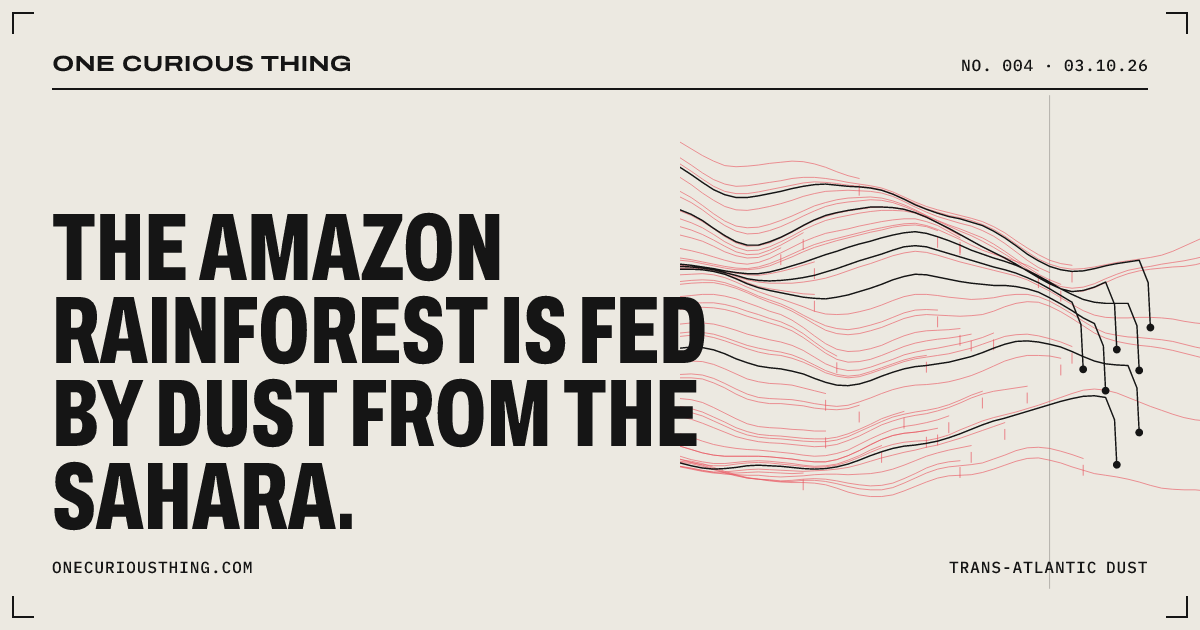
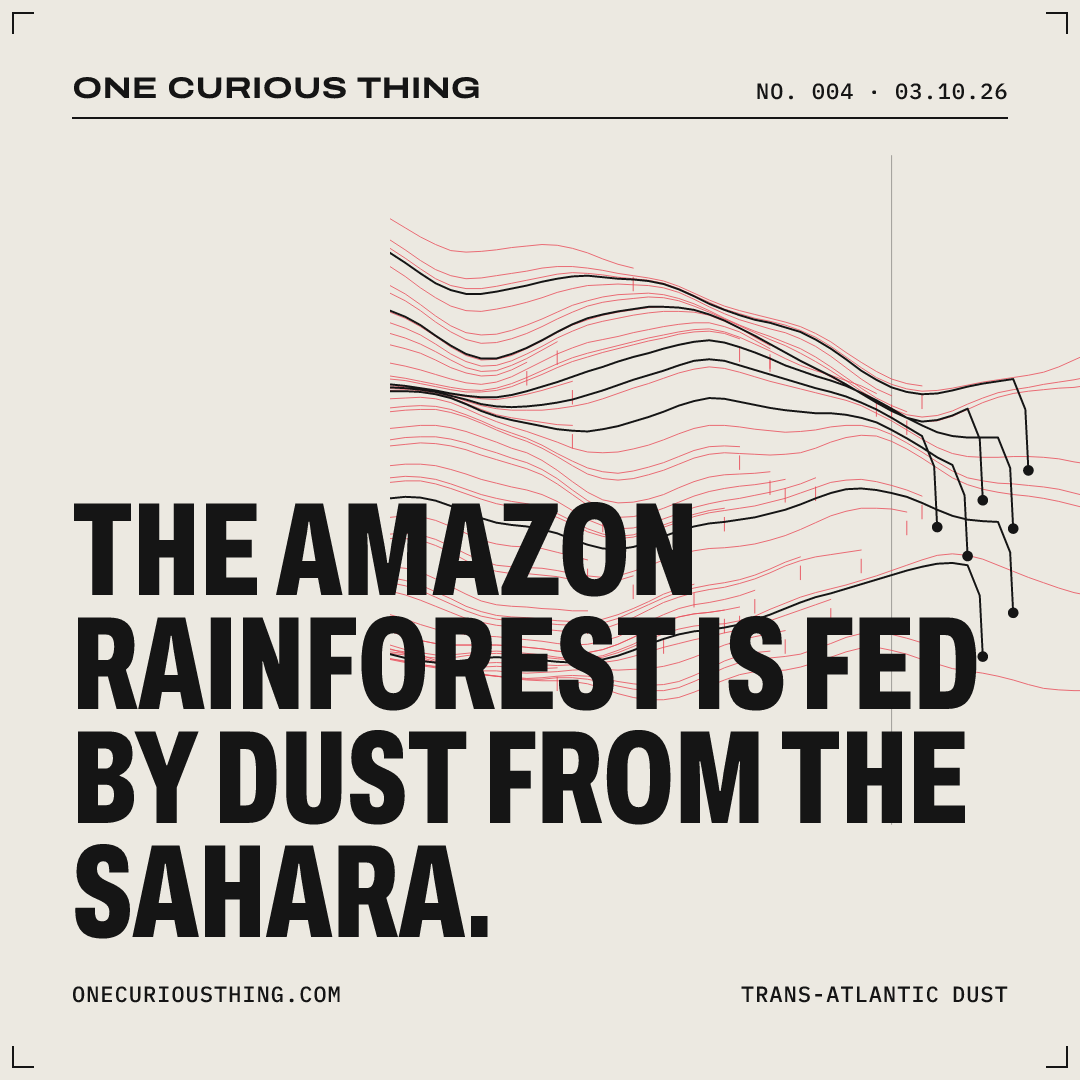
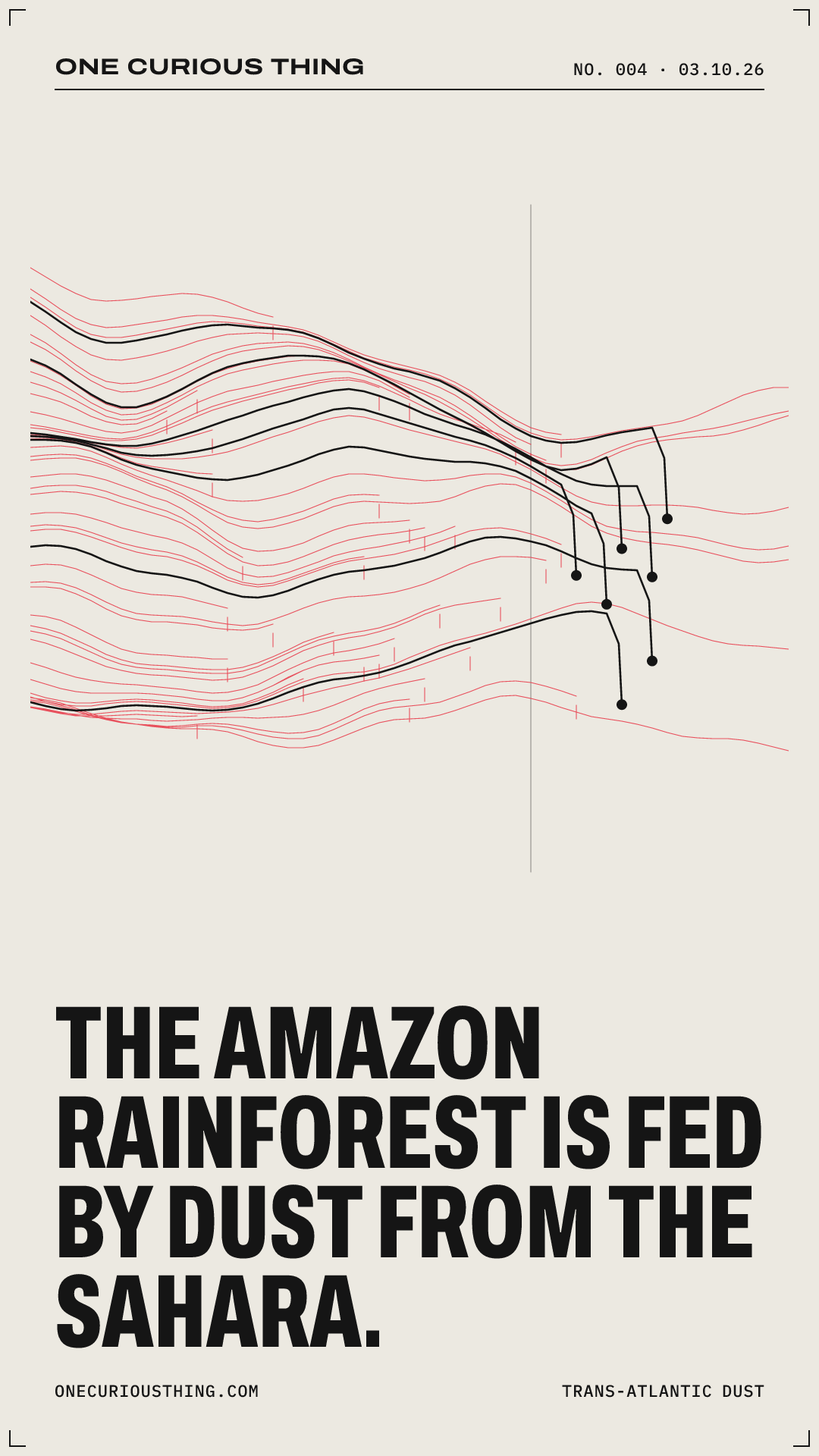
Each year, wind lifts about 182 million tons of dust off the Sahara and carries it west across the Atlantic. NASA’s CALIPSO satellite measured that roughly 27.7 million tons settles over the Amazon basin. It brings an estimated 22,000 tons of phosphorus — about the same amount the rainforest loses to rain and flooding.

Why it’s interesting

Fig. 004 Streams of dust leave the desert. The black lines are the share — about 15% — that settles over the Amazon.
Why it’s interesting

Earth’s largest hot desert and its largest tropical rainforest look like opposites. Measured from orbit, they behave like one system.

The longer version

Much of the phosphorus comes from the Bodélé Depression in Chad, an ancient lake bed whose minerals are made of dead microorganisms. Amazonian soils are poor in nutrients; most are locked up in the plants themselves, and some, including phosphorus, slowly wash away into rivers.

The estimate comes from seven years of lidar data (2007–2013), published by Hongbin Yu and colleagues in Geophysical Research Letters in 2015.

Edition
No. 004
Date
Saturday 3 October 2026
Subject
Trans-Atlantic dust
Locality
Bodélé Depression, Chad → Amazon basin
Period
2007–2013 measurements
Field
earth
Evidence
2 sources, 1 primary

See how we got here

Selected from 21 candidates

  1. 01 Rainforest soils
  2. 02 Nutrient loss
  3. 03 Phosphorus budgets
  4. 04 Trans-Atlantic dust
  5. 05 Bodélé Depression
  6. → The Amazon rainforest is fed by dust from the Sahara.

Sources

Nothing publishes without independent sources. How we verify →

  1. 1
    NASA Satellite Reveals How Much Saharan Dust Feeds Amazon’s Plants

    NASA Goddard Space Flight Center · 2015 · government Primary

    182 Mt lifted, 27.7 Mt deposited over the Amazon, 22,000 t of phosphorus.

    nasa.gov

  2. 2
    The fertilizing role of African dust in the Amazon rainforest: A first multiyear assessment based on CALIPSO lidar observations

    Geophysical Research Letters (Yu et al.) · 2015 · peer reviewed

    The underlying study.

    doi.org

Take it with you SquareStoryWide Permanent link